Wind and Water Erosion
Wind Erosion
The spatial and temporal variation of areas that are sensitive to wind erosion will be analysed by combining the most influential wind erosion factors (climatic erosivity, soil Erodibility, vegetation cover, and landscape roughness)
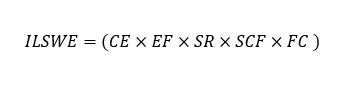
Where: ILSWE is the Index of Land Susceptibility to Wind Erosion, CE is the Climate Erosivity, EF is the Erodible factor, SR is the Surface Roughness, SCF is the Soil Crust Factor and FC is the Fractional vegetation Cover.
A detailed explanation for each of the factors considered is as described below
Climate erosivity
This is the ability of climatic condition in a particular area to yield the conditions necessary for wind erosion to occurred i.e., strong winds and dry soil conditions (Fenta et al., 2020). Climate erosivity is computed using the equation below
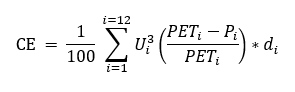
Where: U is the mean wind speed (m/s) at 2-10 m height, PETi is the mean potential evapotranspiration, Pi is precipitation (mm) and, di is the total number of days’ observation was made.
Erodible Factor
This is the ability of the soil to resist erosion by the agents of erosion including water and wind. EF is computed using the equation as applied by (Fryrear et al., 1998).

Where: S is the sand content, Siis the silt content, Cl is the clay content, OM is the organic matter content, and CaCO3is the calcium carbonate content.